
Building a brand that people actually remember is harder than it looks. Somewhere between product features and marketing noise, clarity gets lost. That’s why understanding your brand market position matters so much. It shapes how people see you, why they choose you, and whether they come back again.
Key Takeaways
- Brand market position defines perception, not just product features
- Strong positioning blends audience insight, differentiation, and consistency
- Modern brands win by owning a niche, not copying competitors
- Visual tools like perceptual maps reveal hidden opportunities
- Consistent messaging across channels strengthens positioning
- Clear positioning improves pricing power and customer loyalty
What Is Brand Market Position?
Brand positioning is the strategic process of establishing a unique, favorable, and memorable image for a brand in the minds of target consumers relative to competitors. Your brand market position defines why customers choose you and what makes you different in a crowded market.
It goes beyond features and pricing. It combines perception, emotion, and value into a single idea that customers associate with your brand. When done right, it creates mental space that competitors cannot easily take.
A strong position also connects directly to business outcomes. It influences loyalty, pricing, and long-term growth. Brands that lack clarity often struggle to stand out or scale effectively.
Core Components Of Brand Market Position
These elements form the foundation of any successful positioning strategy.

Target Audience Clarity
Knowing exactly who you serve is the starting point. A clearly defined audience allows you to deal with uncertainty in business, tailor messaging, product features, and tone. Without this clarity, positioning becomes vague and ineffective. The more specific your audience, the stronger your connection.
Understanding pain points and motivations is key. Positioning should reflect what your audience truly values, not just what you want to promote.
Unique Selling Proposition
This is where differentiation becomes real. Your USP defines the unique value that sets your brand apart. It answers one critical question. Why should customers choose you over others?
Strong USPs focus on meaningful differences. These can be based on innovation, experience, or emotional appeal. Generic claims like “high quality” rarely work without proof.
Market Context And Competition
Positioning only exists in comparison. Analyzing competitors helps identify gaps and opportunities. Tools like perceptual maps make it easier to visualize where brands stand and where space exists. This step ensures you are not repeating what others already claim. Instead, you find a position that is both unique and relevant.
Brand Positioning Statement
This is your internal compass. A positioning statement defines your audience, category, and unique value. It guides all marketing and communication decisions. Consistency is critical here. Every touchpoint should reinforce the same message to build a strong and recognizable brand market position.
Types Of Brand Market Position Strategies
Different approaches help brands stand out in different ways.
Value And Price-Based Positioning
Brands using this strategy highlight value for money. It works well in highly competitive markets where price sensitivity is high. The challenge is maintaining margins while staying competitive. This focuses on affordability and cost advantage.
Quality And Premium Positioning
Brands in this category focus on craftsmanship, reliability, or luxury. Customers are willing to pay more because they perceive higher value. This strategy relies heavily on trust and strengthen brand reputation. This emphasizes excellence and exclusivity.
Innovation And Technology Positioning
Innovation-driven brands focus on new solutions, features, or technology. This creates excitement and attracts early adopters. It also requires continuous improvement to maintain leadership. This centers on being ahead of the curve.
Lifestyle And Identity Positioning
Lifestyle positioning aligns the brand with a specific identity or way of life. It goes beyond the product and taps into how customers want to see themselves. This connects with emotions and aspirations.
Why Brand Market Position Matters
A strong brand market position creates clarity for customers. It helps them quickly understand what you offer and why it matters. This clarity reduces decision fatigue and increases conversions.
It also supports premium pricing. When customers see clear value and differentiation, they are less likely to compare purely on price. This strengthens profitability.
Over time, strong positioning builds loyalty. Customers return not just for the product but for the experience and identity associated with the brand. This is where strategy turns into measurable impact.
How To Build Brand Market Position?
This section turns strategy into actionable steps.

- Start by researching your audience in depth. Look beyond demographics and focus on motivations, challenges, and behavior patterns. This insight forms the foundation of your brand market position.
- Next, analyze competitors carefully. Identify what they claim, how they communicate, and where gaps exist. This helps you avoid duplication and discover opportunities.
- Then define your unique value. Focus on what makes your brand meaningfully different. Craft a clear positioning statement that captures this value in simple language.
- Align all brand elements with this position. Your messaging, design, pricing, and customer experience should all reinforce the same idea. Consistency builds trust and recognition.
- Finally, test and refine. Gather feedback from real users and adjust based on their perception. Strong positioning evolves with the market while staying true to its core.
Visualizing Brand Market Position
Seeing your position makes strategy more effective.
Perceptual Mapping
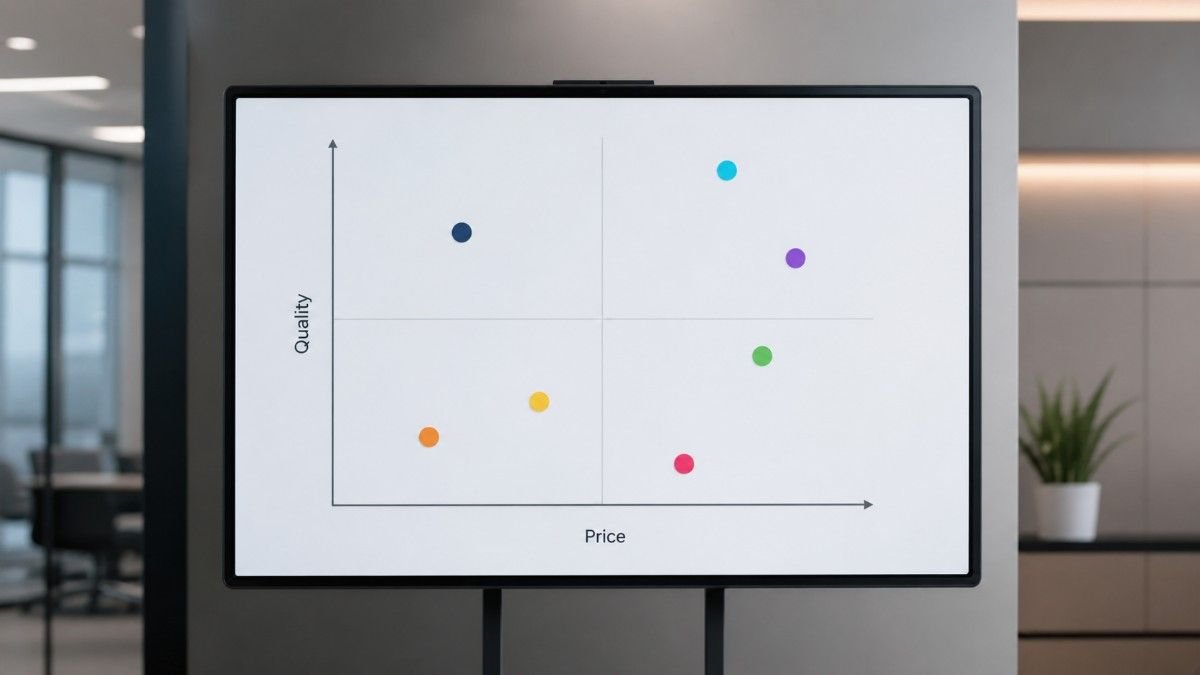
A perceptual map plots brands on axes such as price and quality or simplicity and power. It reveals crowded areas and untapped spaces.
This approach makes abstract positioning more concrete. It also helps teams align on strategic direction. This helps identify opportunities visually.
Category Creation Thinking
Sometimes the best move is creating a new space. Instead of competing directly, some brands redefine the category. This allows them to lead rather than follow. This strategy requires strong storytelling for marketing and clear communication to educate the market.
Messaging Consistency
Every touchpoint should reinforce your position. Your website, ads, and product experience must align. Mixed messages confuse customers and weaken your brand market position. Consistency builds familiarity, and familiarity builds trust.
Common Mistakes In Brand Market Position
Avoiding these pitfalls can save time and resources.
Trying To Target Everyone
Broad positioning leads to weak differentiation. Focusing on a specific audience creates stronger connections and clearer messaging.
Copying Competitors
Customers rarely remember brands that sound the same. Original positioning creates memorability. This removes any chance of standing out.
Ignoring Customer Perception
Your positioning is defined by customers, not internal teams. Regular feedback ensures your brand market position aligns with reality.
Frequently Asked Questions
1. What is the market position of a brand?
It is the perception of a brand in the minds of customers compared to competitors based on value, identity, and differentiation.
2. What is an example of a market position?
Stripe positions itself as a developer-friendly payment platform that simplifies complex financial systems.
3. What are the 4 types of positioning?
Value-based, quality-based, problem-solution, and lifestyle positioning are the most common approaches.
4. What are the 3 C’s of brand positioning?
Customer, Company, and Competitors form the foundation of effective positioning strategy.
Wrapping It Up With A Competitive Edge
Building a strong brand market position is not about being everything to everyone. It is about owning a clear and meaningful space in the customer’s mind. When your positioning aligns with audience needs and stands apart from competitors, it creates lasting impact. Focus on clarity, consistency, and differentiation, and your brand market position will become a powerful driver of growth.
