
There was a time when I thought being busy meant being effective. If the day was packed with meetings, emails, and quick decisions, it felt productive. But over time, it became obvious that constant motion doesn’t always lead to meaningful progress. You can be doing a lot and still not be moving in the right direction.
That shift usually happens when you start questioning your own actions. Why am I doing this task? Where is this decision leading? Strategic thinking begins in that pause. It’s less about doing more and more and more about making sure what you’re doing actually matters in the long run.
What Strategic Thinking Really Means In Business

Strategic thinking is not reserved for top executives or long-term planners. It’s a mental habit. At its core, it’s about stepping back and asking whether your daily actions are building toward something meaningful or just solving immediate problems.
Most businesses fall into a reactive cycle. Something breaks, you fix it. A new opportunity appears, you chase it. While that keeps things running, it rarely builds direction. Strategic thinking introduces intention. It connects today’s work with tomorrow’s outcomes.
It also sharpens your business decision-making skills. Instead of choosing what feels urgent, you begin choosing what creates value over time. That’s where the real shift happens.
The Difference Between Staying Busy And Thinking Ahead

Being busy often feels rewarding because it gives instant feedback. You complete tasks, tick boxes, and respond quickly. But strategic thinking doesn’t always offer that same immediate satisfaction.
Thinking ahead requires patience. It means slowing down enough to evaluate whether a task deserves your attention in the first place. This is where many people struggle. The pressure to act quickly often overrides the need to think clearly.
A simple mindset shift helps here. Instead of asking “What needs to be done right now?” start asking “What actually moves things forward?” That small change can completely reshape how you approach your work.
Habits That Help You Build A Strategic Mindset

Strategic thinking is not something you switch on overnight. It develops through small, consistent habits that change how you process information and make decisions.
One of the most effective ways to build this mindset is by changing the questions you ask yourself. Instead of accepting tasks at face value, go deeper.
- Ask “why” repeatedly to understand the root cause of a problem
- Use “what if” scenarios to explore possible outcomes
- Challenge assumptions before acting on them
Another habit that makes a real difference is creating space to think. Even 30 minutes a week, without distractions, can help you see patterns you would otherwise miss. This is where big-picture thinking starts to form.
Over time, you’ll notice that you’re not just reacting anymore. You’re anticipating.
How To Apply Strategic Thinking In Everyday Business Decisions
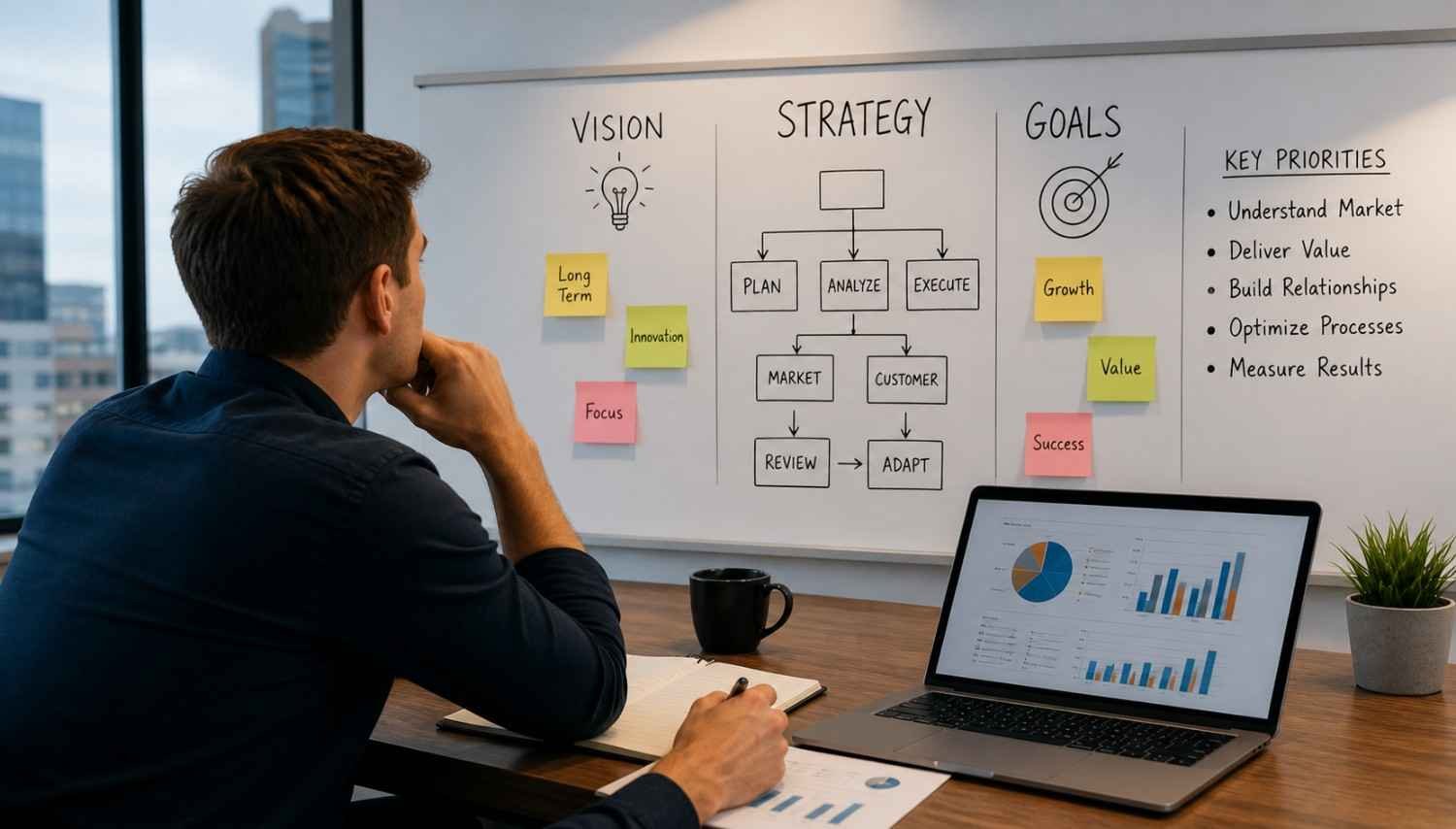
Strategic thinking becomes powerful when it shows up in small, daily choices. It’s not just about planning the future. It’s about improving the quality of decisions you make today.
Start with prioritization. Not everything urgent is important. Before jumping into a task, pause and ask whether it aligns with your long-term direction. This is where many businesses lose focus.
Another practical approach is testing ideas on a smaller scale. Instead of committing large resources upfront, treat decisions as experiments. This reduces risk and gives you better data to work with.
You can also use reflection as a tool. Spending just a few minutes at the end of the day reviewing what worked and what didn’t can sharpen your critical thinking in business. Over time, these small adjustments lead to stronger outcomes.
Why Most Decisions Go Wrong (And How To Fix That)

Most poor decisions don’t come from a lack of intelligence. They come from a lack of clarity. When you’re overwhelmed or under pressure, it’s easy to default to quick fixes.
That’s where strategic thinking plays a crucial role. It forces you to slow down just enough to evaluate the situation properly. Instead of reacting, you analyze.
A useful technique here is the pre-mortem approach. Before making a decision, imagine it has already failed. Then ask yourself what went wrong. This helps uncover blind spots that are easy to miss in the moment.
This also connects closely with dealing with uncertainty in business, because many decisions involve incomplete information. Strategic thinkers don’t wait for perfect clarity. They make informed moves while staying aware of potential risks.
Learning To Recognize Patterns Instead Of Just Problems

One of the biggest advantages of strategic thinking is pattern recognition. Instead of seeing isolated problems, you begin to notice connections.
For example, a drop in performance might not just be a team issue. It could be linked to market changes, customer behavior, or even internal processes. When you connect these dots, your decisions become more accurate.
This is where staying informed matters. Regularly scanning industry trends, customer feedback, and performance data helps you build context. Over time, this strengthens your strategic mindset and improves how you interpret situations.
Turning Daily Actions Into Long-Term Progress

Strategic thinking is not about making big, dramatic moves all the time. It’s about aligning small actions with a larger direction.
Every decision either adds to your progress or distracts from it. The goal is not perfection but consistency. When your daily actions reflect your long-term goals, growth becomes more predictable.
This also improves your approach to business planning and strategy. Instead of creating plans that sit unused, you build systems that influence everyday behavior.
That’s where real progress happens, not in isolated moments, but in repeated, intentional actions.
Frequently Asked Questions: How To Think Strategically In Business And Make Smarter Everyday Moves
1. How can I improve my strategic thinking in business?
Start by slowing down your decision-making process. Ask deeper questions, analyze situations, and reflect regularly. Over time, this builds stronger thinking patterns.
2. What is the difference between strategic and tactical thinking?
Strategic thinking focuses on long-term direction, while tactical thinking deals with immediate actions. Both are important, but strategy guides where those actions should lead.
3. How much time should I spend on strategic thinking?
Even 30–60 minutes per week can make a difference. The key is consistency and using that time to reflect, analyze, and plan ahead.
4. Can strategic thinking be learned, or is it natural?
It can absolutely be learned. With practice, better questioning, and regular reflection, anyone can develop a strong strategic mindset.
A Final Reflection On Thinking Smarter In Business
Strategic thinking doesn’t require a complete overhaul of how you work. It starts with awareness. The moment you begin questioning your actions and aligning them with a bigger goal, things start to shift. You stop reacting to everything and start choosing what actually deserves your attention.
Over time, those choices compound. And that’s what separates motion from real progress.
