
Scrolling through endless ads and content used to feel overwhelming, yet some brands always stood out and guided decisions naturally. That’s the power of a digital marketing funnel. It’s not just a concept but a system that shapes how people discover, trust, and eventually buy from a brand in a structured, measurable way.
What Is A Digital Marketing Funnel?
Let’s start with a simple understanding before diving deeper.
Digital Marketing Funnel Definition?
A digital marketing funnel is a visual model mapping a customer’s journey from discovering a brand to making a purchase and beyond. It is typically divided into Awareness, Consideration, Conversion, and Retention stages, helping businesses guide users step by step.
This structured approach ensures that marketing efforts are aligned with user intent at every stage. Instead of random campaigns, brands can design targeted messaging that improves engagement and drives better results over time.
Why Do Businesses Use A Digital Marketing Funnel?
A digital marketing funnel helps identify where potential customers drop off during the buying journey. This insight allows marketers to optimize weak points and improve conversions using data-driven strategies.
It also ensures that communication remains relevant. Instead of pushing sales immediately, brands can nurture leads gradually, building trust and increasing the likelihood of long-term customer relationships.
Digital Marketing Funnel Stages Explained
Each stage plays a unique role in moving users closer to conversion.

Awareness Stage (ToFU)
At this stage, customers first discover your brand through channels like SEO, social media, or paid advertising. The focus is on visibility and education rather than selling.
Content such as blogs, videos, and infographics works best here. The goal is to attract attention and introduce your brand as a helpful solution to a problem.
Consideration Stage (MoFU)
In the consideration stage, users begin researching and comparing options. They engage with more detailed content like case studies, guides, and email newsletters.
This is where trust-building becomes crucial. Providing valuable insights and addressing objections can significantly improve the chances of moving users further down the funnel.
Conversion Stage (BoFU)
The conversion stage is where prospects make a decision. Tactics like product demos, free trials, testimonials, and discounts help push users toward taking action.
Clear calls to action and optimized landing pages play a major role here. Even small improvements in user experience can lead to higher conversion rates.
Retention And Loyalty Stage
After the purchase, the focus shifts to retaining customers and encouraging repeat business. Personalized emails, loyalty programs, and follow-ups are key strategies.
Strong retention efforts not only increase customer lifetime value but also turn customers into brand advocates who promote your business organically.
Common Digital Marketing Funnel Tactics
These strategies help optimize each stage effectively.
Traffic Generation
Driving traffic is the first step in building a successful funnel. Businesses use SEO, social media marketing, and paid ads to bring users to their website or landing pages.
Consistent and targeted traffic ensures that the top of the funnel remains active. Without it, even the best conversion strategies cannot perform effectively.
Lead Magnets And Data Capture
Lead magnets such as ebooks, checklists, and free tools are used to collect user information. These resources provide value while encouraging users to share their contact details.
This data becomes essential for nurturing leads through email marketing and automation, allowing businesses to maintain ongoing communication.
Remarketing Strategies
Remarketing targets users who have already interacted with your brand but did not convert. Ads and personalized messages remind them of your offering and bring them back into the funnel.
This tactic is highly effective because it focuses on warm audiences who are already familiar with your brand, increasing the chances of conversion.
Performance Analysis And Optimization
Tracking metrics such as conversion rates, bounce rates, and cart abandonment is critical for improving funnel performance. Data helps identify bottlenecks and areas for improvement.
Continuous optimization ensures that the funnel evolves with user behavior and market trends, leading to better long-term results.
Real Case Studies And Funnel Metrics
Let’s look at real-world insights that many competitors miss.

SaaS Funnel Performance
A SaaS company improved its lead-to-customer conversion rate from 12% to 19% by implementing automated email sequences and personalized onboarding experiences. The key change was focusing on user intent rather than generic messaging. This highlights how personalization and automation can significantly impact results without increasing traffic.
E-commerce Funnel Optimization
An e-commerce brand reduced cart abandonment by 22% using remarketing ads and email reminders. Adding urgency through limited-time offers also improved conversions. Small tweaks at the bottom of the funnel can often deliver the highest ROI.
Key Funnel Benchmarks
Typical funnel metrics include awareness to lead conversion rates of 2 to 5 percent and lead to customer rates of 10 to 20 percent. Email open rates often range between 20 and 30 percent depending on the industry.
Monitoring these benchmarks helps businesses understand whether their funnel is performing above or below average.
AI Powered Digital Marketing Funnel Strategies
Modern funnels are smarter, faster, and more personalized.
AI Driven Personalization
AI tools analyze user behavior and preferences to deliver personalized content. This improves engagement and ensures that users see relevant offers at the right time. Personalization is no longer optional. It is a key factor in standing out in competitive markets.
Automated Customer Journeys
Automation platforms guide users through the funnel using triggered emails, chatbots, and dynamic content. This reduces manual effort while maintaining consistent communication. Automated journeys ensure that no lead is left unattended, improving efficiency and scalability.
Predictive Funnel Optimization
AI can predict which leads are most likely to convert based on historical data. This allows marketers to focus resources on high-value prospects. Predictive insights make decision-making more accurate and help maximize return on investment.
How To Build A Digital Marketing Funnel
Here is how to create a high converting system step by step.
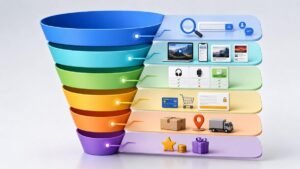
Building a digital marketing funnel begins with understanding your audience’s needs, preferences, and behavior patterns. Once you identify their pain points, you can create targeted content that addresses each stage of the funnel effectively.
The next step is to design content and campaigns tailored to awareness, consideration, and conversion stages. Integrating tools like CRM systems, email automation, and analytics platforms ensures smooth lead nurturing and tracking.
Finally, continuous monitoring and optimization are essential. By analyzing key metrics and user behavior, you can refine your funnel over time, improving performance and achieving consistent growth.
Frequently Asked Questions
1. What Are The 4 Stages Of The Marketing Funnel In A Digital Marketing Funnel
Awareness, Interest, Desire, and Action represent the four core stages guiding users from discovery to purchase.
2. What Is The 3 3 3 Rule In Marketing In A Digital Marketing Funnel
It focuses on capturing attention within 3 seconds, engaging within 30 seconds, and driving action within 3 minutes.
3. What Are The 5 Stages Of The Marketing Funnel In A Digital Marketing Funnel
Awareness, Consideration, Conversion, Retention, and Advocacy form a complete modern funnel.
4. What Are The 7 Phases Of A Funnel In A Digital Marketing Funnel
Awareness, Interest, Consideration, Intent, Evaluation, Purchase, and Loyalty cover the extended funnel journey.
Wrapping It Up With Funnel Power
A well-optimized digital marketing funnel is more than a strategy. It is a system that aligns marketing efforts with customer behavior. By combining strong content, data analysis, AI tools, and automation, businesses can attract, nurture, and convert leads effectively while building long-term relationships.
