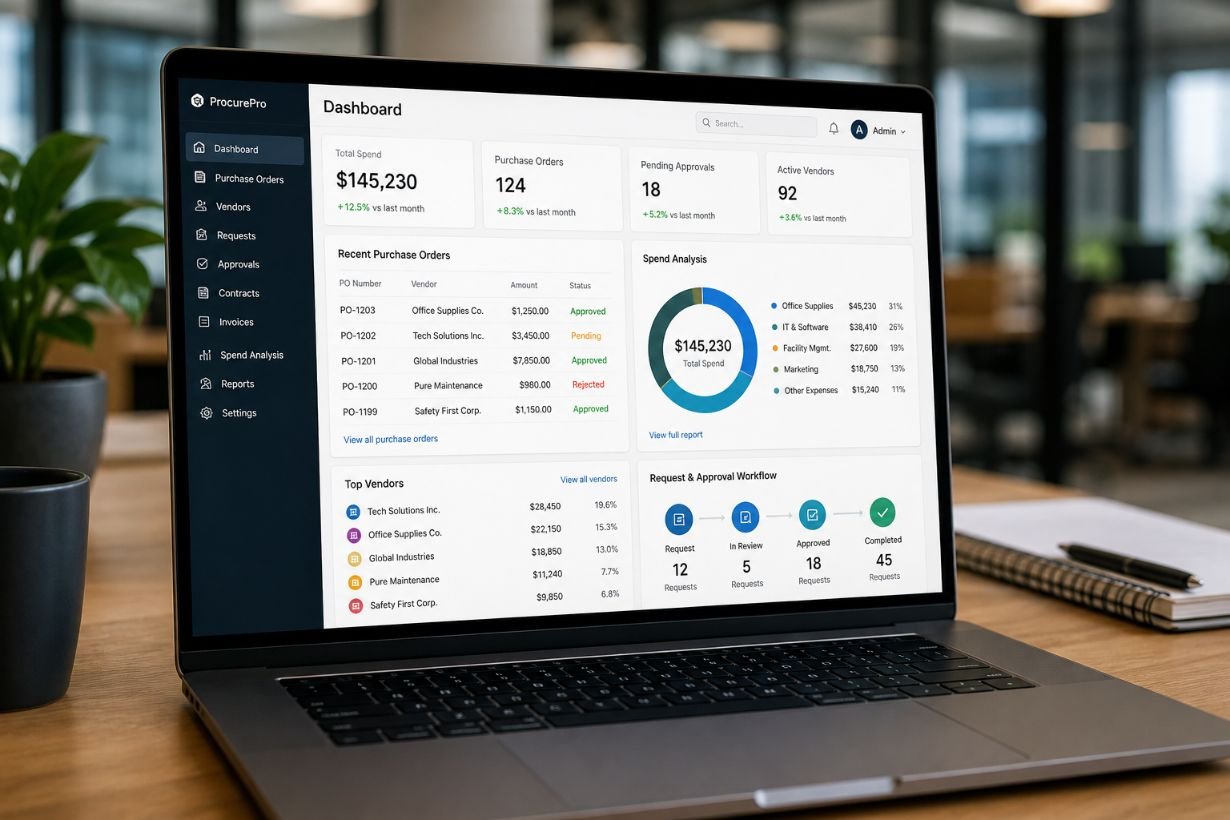
Procurement is no longer just about buying goods at the lowest price. For small businesses, it plays a critical role in managing costs, improving efficiency, and building reliable supplier relationships. However, manual processes, spreadsheets, and scattered vendor communication often make procurement slow and error-prone.
This is where modern procurement tools come in. The right software can automate workflows, centralize purchasing, and provide real-time visibility into spending. In this guide, we’ll explore the best procurement tools for small business, key features to look for, and how to choose the right solution for your needs.
What Are Procurement Tools?
Procurement tools are software platforms designed to streamline purchasing activities. They help businesses manage vendor relationships, create purchase orders, track spending, automate approvals, and integrate with accounting systems.
For small businesses, these tools simplify operations by reducing manual work and improving control over budgets. Instead of juggling emails, invoices, and spreadsheets, everything is managed in one centralized system.
Why Small Businesses Need Procurement Software
Small businesses often operate with limited resources, making efficiency essential. Procurement tools help eliminate bottlenecks, reduce errors, and ensure better financial oversight.
Without proper systems, businesses may face issues such as duplicate purchases, missed approvals, poor vendor communication, and lack of spending visibility. Procurement software addresses these challenges by creating structured workflows and improving accountability.
Additionally, as businesses grow, procurement becomes more complex. Having the right tools early ensures scalability and smoother expansion.
Top Procurement Tools for Small Business

There are many procurement platforms available, each designed for specific needs. Here are some of the most popular and effective options for small businesses.
Order.co is widely recognized for simplifying purchasing. It centralizes vendors, automates approvals, and allows one-click ordering, making it ideal for businesses looking to streamline operations.
Amazon Business is a popular choice for companies that rely heavily on online purchasing. It integrates easily into workflows and offers fast delivery, tracking, and competitive pricing.
Precoro focuses on budget control and purchase order management. It provides visibility into committed versus actual spending, helping businesses stay within budget.
Procurify is known for its mobile-friendly interface and approval workflows. It integrates well with other systems and is suitable for growing teams.
Tradogram specializes in supplier management, making it easier to handle vendor catalogs, RFQs, and communication.
Airbase combines procurement with accounts payable, expense management, and corporate cards, offering a comprehensive financial solution.
Other notable tools include Spendwise for simple purchase order workflows, ControlHub for invoice matching, and Kissflow for customizable procurement processes.
Key Features to Look For in Procurement Tools
Choosing the right procurement software requires understanding which features will bring the most value to your business.
- Automated approval workflows to reduce delays and manual follow-ups
- Spend visibility and analytics for better budgeting and forecasting
- Vendor management systems to organize supplier information Inventory tracking to monitor stock levels and deliveries
- Integration capabilities with accounting and ERP systems
- These features help businesses move from reactive purchasing to strategic procurement.
How to Choose the Right Procurement Tool
Selecting procurement software can feel overwhelming due to the large number of options available. However, a structured approach can simplify the process.
Start by defining your current challenges. Are you struggling with approvals, tracking expenses, or managing vendors? Understanding your pain points will help narrow down your options.
Next, evaluate usability. Even the most advanced tool will fail if your team finds it difficult to use. Look for intuitive interfaces and minimal training requirements.
Integration is another key factor. The software should connect seamlessly with your existing systems to avoid disruptions and duplication of work.
Finally, consider scalability. Choose a tool that can grow with your business and adapt to changing needs.
Benefits of Using Procurement Tools
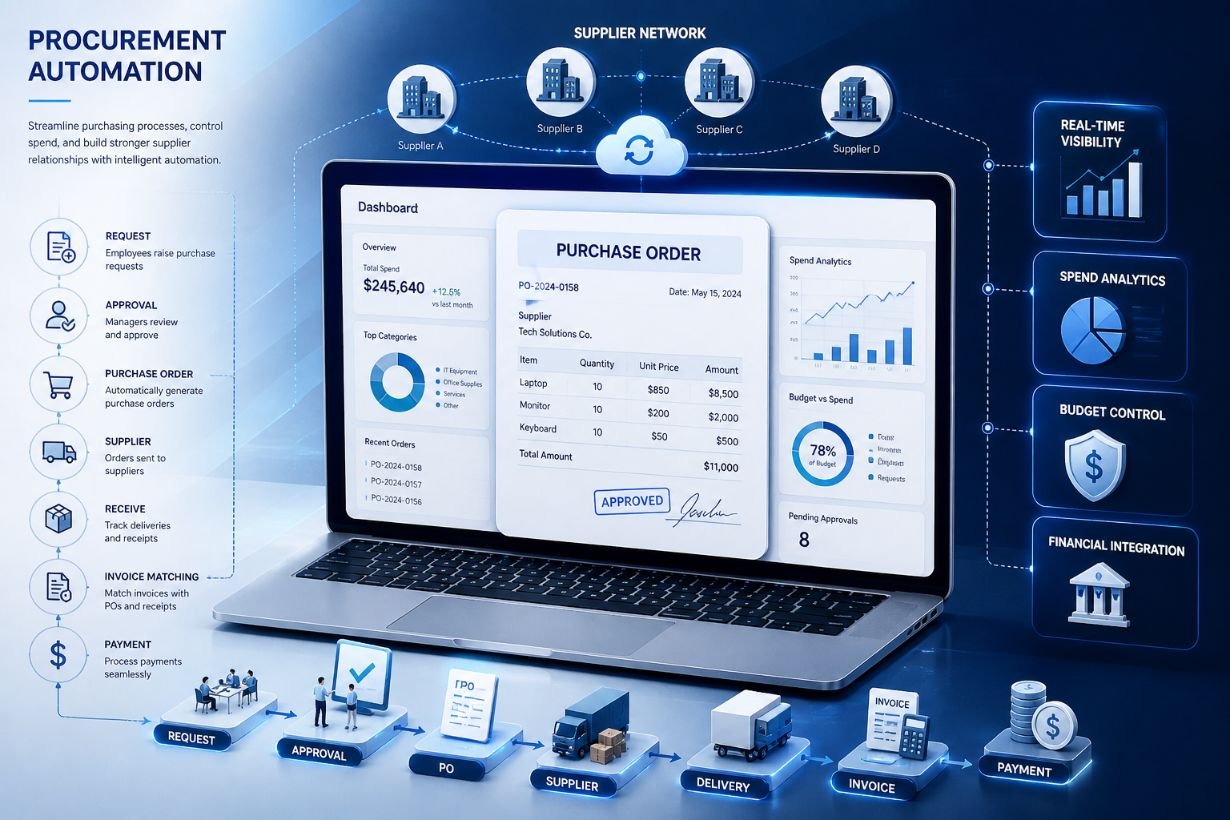
Implementing procurement software offers several advantages that go beyond efficiency.
First, it improves financial control by providing real-time visibility into spending. This allows businesses to track budgets, identify cost-saving opportunities, and avoid overspending.
Second, it enhances productivity by automating repetitive tasks such as approvals and order processing. This frees up time for more strategic activities.
Third, it strengthens vendor relationships by improving communication and ensuring timely payments. Reliable processes build trust and encourage better service from suppliers.
Lastly, it reduces risk by creating clear audit trails and ensuring compliance with internal policies.
Common Mistakes to Avoid
While procurement tools can deliver significant value, businesses often make mistakes during selection and implementation.
One common mistake is choosing software based solely on features rather than usability. A complex system may offer advanced capabilities but fail due to low adoption.
Another mistake is skipping the testing phase. Running pilot programs or trials helps identify whether the tool meets your needs before making a full commitment.
Businesses should also avoid ignoring integration requirements. A tool that does not connect with existing systems can create more problems than it solves.
FAQs
What are the tools used in procurement?
Procurement tools include purchase order systems, spend management platforms, supplier management software, and accounts payable solutions. Examples include Order.co, Amazon Business, Precoro, Procurify, and Airbase.
What are the 5 P’s of procurement?
The 5 P’s of procurement are price, product, place, process, and people. These elements help businesses evaluate purchasing decisions from cost, quality, delivery, workflow, and relationship perspectives.
What are the 10 C’s of procurement?
The 10 C’s include competency, capacity, commitment, control, cash, cost, consistency, culture, clean practices, and communication. These factors are used to evaluate suppliers and procurement strategies.
What are the 5 R’s of procurement?
The 5 R’s focus on getting the right product, in the right quantity, at the right price, from the right supplier, at the right time. This framework ensures efficient and effective procurement practices.
How can I compare procurement software providers?
To compare providers, evaluate usability, core features, integration capabilities, pricing, scalability, and customer support. Running trials and reviewing case studies can also help identify the best fit.
What should I look for in a procurement software evaluation process?
Focus on how well the software addresses your business needs, how easy it is to use, how quickly it can be implemented, and whether it integrates with your current systems.
How do I assess whether procurement software can scale?
Look for flexible configurations, strong integration capabilities, and the ability to handle increased transaction volumes and additional users as your business grows.
Building a Smarter Procurement Strategy for Growth
Procurement tools are no longer optional for small businesses aiming to scale efficiently. They provide the structure, visibility, and automation needed to manage purchasing effectively and reduce operational risks.
The key is not to chase the most advanced software but to find a solution that aligns with your current needs while supporting future growth. Start small, test different options, and gradually expand your capabilities.
As you refine your procurement processes, it’s equally important to understand how to choose the right vendor for your business. The combination of the right tools and the right vendors creates a strong foundation for long-term success.
By adopting the right procurement tools for small business, you can transform purchasing from a routine task into a strategic advantage that drives efficiency, savings, and growth.
